
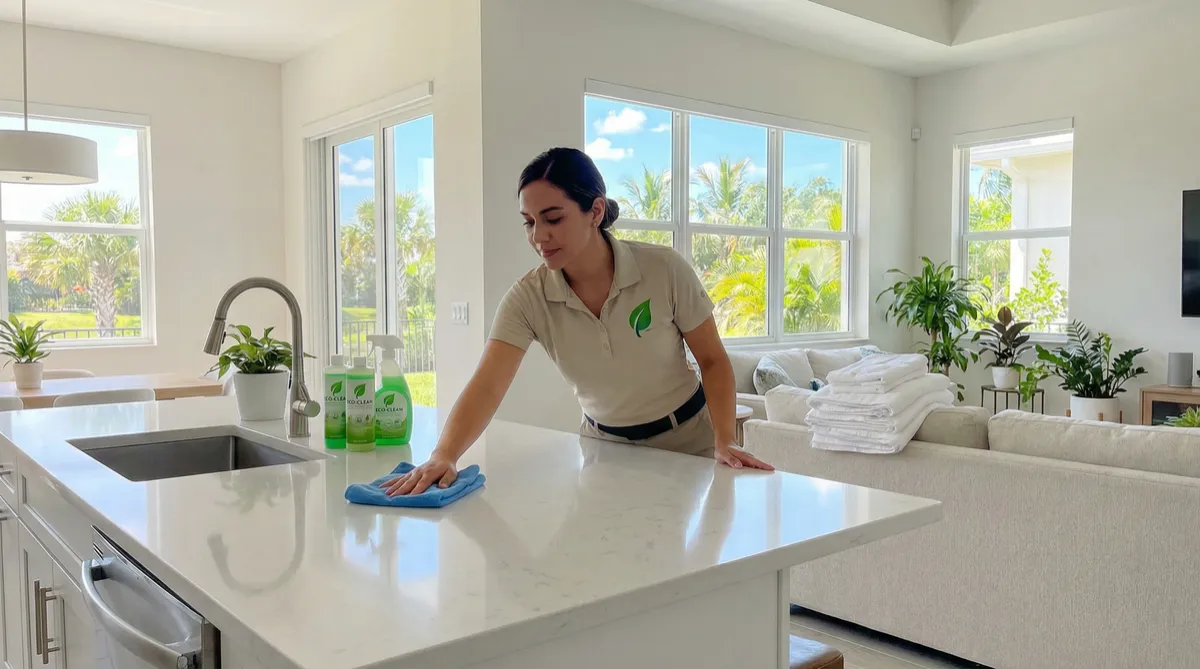
A reliable short-term rental cleaning service does more than tidy a property after checkout. It prepares the accommodation for the next guest by cleaning, sanitising appropriate surfaces, resetting rooms, laundering or replacing linens, checking supplies and reporting maintenance issues. The quality of that turnover can influence guest reviews, repeat bookings and the time a host spends managing the property.
Whether you manage one holiday home or several furnished rentals, the most effective cleaning system is repeatable. This guide explains what a professional turnover can include, how to build a checklist, what affects the price, how to coordinate cleaners around check-in and how to check the property without creating unnecessary work for the team.
What Is a Short-Term Rental Turnover Clean?
A turnover clean takes place between one guest’s departure and the next guest’s arrival. It often includes removing rubbish, cleaning bathrooms and kitchens, changing bed linen, vacuuming and mopping floors, wiping high-touch surfaces, restocking agreed consumables and making the property look orderly. The cleaner may also complete a visual condition check and report damage, missing items or maintenance issues.
Turnover cleaning differs from a deep clean. A standard turnover focuses on restoring the property to a consistent guest-ready condition within a limited time. A deep clean may address behind appliances, detailed fixtures, upholstery, vents, grout, windows or other tasks that do not need to be completed during every guest changeover. Hosts should schedule both rather than expecting a short turnover visit to cover every intensive task.
Why Consistency Matters More Than a Last-Minute Tidy
Guests expect a clean and functional space when they arrive. A missed hair in a bathroom, a food spill in a refrigerator or an unmade bed can undermine confidence even if the rest of the property looks attractive. A written checklist helps the cleaner follow the same standard each time, regardless of which staff member is assigned to the property.
Consistency also helps a host identify where time is being lost. If cleaners repeatedly report that supplies are missing or that a laundry load cannot finish before check-in, the host can change the process. A standard procedure reduces memory-based work and makes it easier to train a replacement cleaner when schedules change.
Build a Room-by-Room Cleaning Checklist
Start with the entry and shared living areas. Remove rubbish, check floors, wipe surfaces, clean glass where needed, straighten furniture and inspect lamps, remotes and visible fixtures. Look under cushions and around seating for items left behind. Arrange the room according to a reference photo so the layout looks the same across stays.
In the kitchen, remove food left by guests according to the property’s policy, clean countertops, sink and appliance fronts, check the refrigerator and microwave, empty rubbish and replace liners. Wash and put away dishes, confirm that the dishwasher is empty or running according to the schedule, and check that basic utensils are present. Do not leave opened food for the next guest unless the host has a clear, safe policy for that item.
Bathroom Cleaning and Guest Readiness
Bathrooms require careful attention to the toilet, sink, taps, shower or tub, mirrors, handles and frequently touched surfaces. Remove used towels and bath mats, replace them with clean items and check that the floor is dry. Empty bins and restock the agreed amount of toilet paper, hand soap and other amenities. Inspect drains and fixtures for slow flow, leaks or damage, and report issues rather than attempting unapproved repairs.
Follow product labels and the property’s hygiene protocol for cleaning and disinfecting. Do not mix cleaning chemicals, particularly products containing bleach and ammonia or acids. Use the correct cloths and tools for different areas to avoid transferring soil from toilets to food-preparation surfaces. Ventilate the room according to product instructions and leave the bathroom dry and free from strong chemical odours.
Bedrooms, Linens and Laundry
Strip used bedding and collect towels in the designated laundry area. Check mattress protectors, pillow protectors and duvet covers for stains or damage. Make each bed using the host’s chosen arrangement and verify that the correct number of pillows, blankets and towels is available. A photograph of the finished bed can help a team maintain a consistent presentation.
Many operators keep multiple linen sets for each bed so the cleaning team is not dependent on finishing laundry during a tight turnaround. A rotation system separates clean, ready-to-use sets from used items and helps prevent shortages. Track linen condition and replacement dates. Avoid returning damp towels or partially dried sheets to storage, because trapped moisture can create odours and hygiene concerns.
Restocking Supplies Without Overspending
Hosts should agree on exactly which items the cleaning team is expected to replace. Typical consumables may include toilet paper, hand soap, dishwashing liquid, bin liners, paper towels and selected guest toiletries. The cleaner should not guess how much to leave, because excessive restocking increases cost while insufficient supplies create guest complaints.
Create a standard inventory with minimum and maximum quantities for each item. For example, specify the number of spare toilet rolls per bathroom, the amount of dish soap and the expected supply of bin liners. Store backup inventory in a locked owner cupboard or labelled shelf. Ask the cleaner to record low stock rather than using the final reserve without reporting it.
Property Inspection and Damage Reporting
A turnover is an opportunity to notice issues before the next guest arrives. The cleaner can check for visible damage, missing items, broken bulbs, water leaks, appliance faults, unusual odours or signs of pests. A simple checklist with a “clear” or “needs attention” field makes it easier to report concerns consistently.
Use photographs to document a maintenance issue when appropriate, but set clear privacy rules. Images should focus on the property condition and must not include guest belongings or personal information unless there is a legitimate, policy-compliant reason. Cleaners should report damage promptly and avoid arguing with a guest or trying to assign blame. The host or property manager handles communication and any platform process.
What a Professional Cleaning Service Should Include
Before hiring a service, ask it to describe its standard turnover scope in writing. Confirm whether it includes linen change, laundry, dishes, rubbish removal, restocking, inspection photos and reporting. Some companies provide labour only, while others can manage supplies, linen storage or maintenance coordination. Clarifying the scope prevents misunderstandings when the property is unusually dirty or the schedule is compressed.
Ask who provides cleaning products and equipment, whether staff are insured where applicable, how backup cleaners are arranged and how quality is checked. If the rental contains specialty finishes, natural stone, delicate furniture or high-end appliances, provide care instructions. A cleaner cannot protect a surface if the host has not disclosed the material and approved products.
How Cleaning Services Set Their Prices
Pricing may depend on property size, bedroom and bathroom count, number of beds, guest capacity, laundry volume, distance, frequency and the amount of restocking or inspection work. A small studio with one bed is not comparable to a large house with several bathrooms, a hot tub and outdoor spaces. Ask whether the quote is per turnover, hourly or based on a recurring service agreement.
Clarify extra charges for excessive mess, dishes, pet hair, heavy laundry, same-day emergency cleans, supply runs or special requests. Ask whether the cleaning fee covers only labour or also consumables, linen service and tax. A transparent price schedule helps hosts set a guest cleaning fee realistically, while remembering that the guest fee and the cleaner’s actual cost are not necessarily the same amount.
Scheduling Tight Check-Out and Check-In Windows
Turnover schedules can be challenging when one guest leaves in the morning and the next arrives in the afternoon. Build the time estimate from the actual property, not a generic industry rule. Include access time, laundry transport, inspection, restocking and the possibility that the previous guest leaves late. If the schedule regularly feels impossible, reduce the number of same-day turns or build a backup plan.
Use a shared calendar or property management system to give cleaners accurate departure and arrival times. Notify the team about early check-in requests only after confirming that the property can be ready. Avoid promising a guest access before the cleaner has completed the agreed checklist and the host has checked any reported issue.
Deep Cleaning and Seasonal Maintenance
Schedule deeper work separately from every turnover. Tasks may include cleaning inside kitchen appliances, washing windows, detailed baseboard cleaning, vent and fan cleaning, upholstery care, grout treatment, patio cleaning and checking less visible storage areas. The frequency depends on guest traffic, property condition and local conditions such as pollen, sand or snow.
Deep cleaning can also reveal maintenance needs. Inspect caulking, shower seals, cabinet hinges, smoke and carbon monoxide alarms, HVAC filters and exterior fixtures according to manufacturer guidance and local requirements. Cleaning staff should only test or service safety equipment if the host has assigned that responsibility and provided the correct procedure. A visual check is not a substitute for proper inspection or professional maintenance.
Quality Control: Photos, Checklists and Feedback
Choose a small set of reference photographs for each room: finished bed, clean bathroom, kitchen counter, living area and entry. Ask the cleaner to submit completion photos using a secure channel. Photos can help verify layout and reveal missed tasks, but they should not become an unreasonable demand for dozens of images after every stay.
Review guest feedback for recurring patterns. One comment about a missed item may be an isolated event, while repeated complaints about floors, bathrooms or odours suggest a process problem. Share specific feedback respectfully and update the checklist when the standard changes. Recognise dependable work and pay agreed rates on time; a stable relationship with a good cleaning team is valuable to a rental operation.
How to Choose Between an Independent Cleaner and a Company
An independent cleaner may offer direct communication and flexibility, particularly for one property. A cleaning company may provide backup staff, documented processes, insurance and the ability to cover multiple properties. Neither arrangement is automatically better. Evaluate reliability, scope, communication, training, references and the ability to meet your booking calendar.
Ask what happens when the assigned cleaner is sick or delayed. Confirm who has access codes, how keys are stored and how access is removed when a working relationship ends. Use unique codes where possible and avoid sharing personal home passwords. Set clear expectations about property security, privacy, photographs and reporting of guest belongings.
Questions to Ask Before Signing a Cleaning Agreement
- What exact tasks are included in a standard turnover clean?
- Who supplies the cleaning products, tools, linens and consumables?
- How are laundry, restocking and property photos handled?
- What are the charges for additional mess, extra beds or urgent scheduling?
- How do you cover staff absences and same-day booking changes?
- How are damage, lost property and maintenance issues reported?
- What access-control, key-storage and privacy procedures do you follow?
- Can you provide references or a trial clean before a long-term agreement?
Frequently Asked Questions
What is included in a short-term rental cleaning service?
It commonly includes cleaning rooms, bathrooms and kitchen surfaces, changing linens, removing rubbish, restocking agreed supplies and checking the property. Confirm the exact scope with the provider.
How long does a turnover clean take?
Time depends on the property’s size, number of beds and bathrooms, laundry requirements, condition and extras. Ask for an estimate based on the actual layout.
Should the cleaner do laundry?
That depends on the service agreement and turnover window. Some hosts use linen rotation or an off-site laundry service so the next clean is not delayed by drying time.
How often should a short-term rental receive a deep clean?
There is no universal interval. Schedule deeper tasks according to occupancy, property condition, seasonal factors and the recommendations for the materials and appliances.
Should cleaning staff report damage?
Yes, a written reporting process helps the host respond before the next check-in. The cleaner should document the condition and let the host manage guest or platform communication.
How can I improve cleaning consistency?
Use a room-by-room checklist, reference photographs, clear supply standards, a realistic schedule and regular feedback with the cleaning team.
Conclusion
A dependable short-term rental cleaning service protects the guest experience by combining a consistent room reset with laundry, restocking, inspection and clear communication. Hosts should define the service scope, set realistic turnover windows, create a written checklist and agree on how additional work is priced. A separate deep-clean schedule and a simple damage-reporting process help keep the property in good condition over time. Choose a cleaner or company for reliability and transparent procedures, not price alone.
