
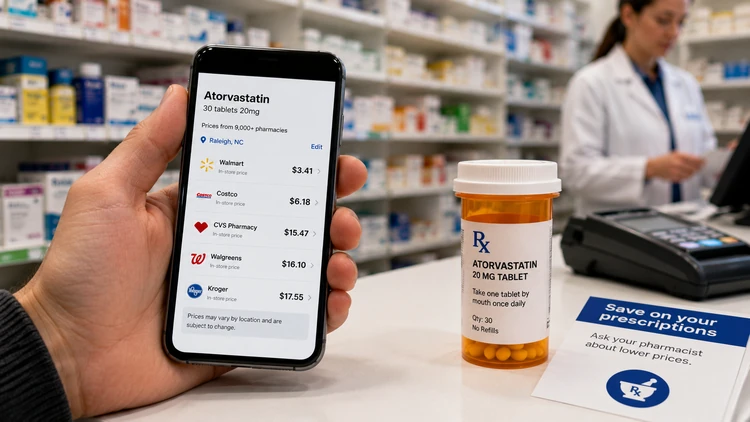
People often ask can you use GoodRx with insurance when a prescription coupon shows a price that looks lower than the amount quoted by their health plan. The practical answer is that you can compare the two options, but a GoodRx coupon is generally used instead of submitting that same prescription transaction to insurance. It is not an extra discount that is simply layered on top of the plan’s copay.
That distinction matters because the amount paid today is only one part of the decision. A purchase outside the insurance benefit may be treated differently for deductible and out-of-pocket tracking, and public-program rules may also apply. This guide explains how to compare the options, what to ask at the pharmacy counter, and how to avoid making a decision from an outdated online price.
Can GoodRx and Insurance Be Applied to One Fill?
GoodRx’s official support guidance says that a discount can be used instead of prescription insurance or Medicare when the discount price is lower, but it cannot be combined with insurance or a federal or state-funded program such as Medicare or Medicaid for the same transaction. GoodRx describes its service as a discount, not insurance. In practical terms, the pharmacy generally processes the prescription using one billing route for that fill.
You can still have an active health insurance policy and use a GoodRx coupon as an alternative payment option where permitted. The choice is made for the prescription transaction, not necessarily for every medicine you take. A person might choose insurance for one prescription and compare a discount for a different prescription, subject to applicable plan and public-program requirements.
Why the Coupon Price May Look Lower
Insurance pricing is shaped by the plan’s formulary, drug tier, pharmacy network, copay or coinsurance rules and deductible status. A medicine may have a predictable copay when coverage applies, but the amount can be higher if the deductible has not been met, the medicine is not on the preferred formulary or a particular pharmacy is outside the preferred network.
A discount price is calculated under a different arrangement and can vary between pharmacies. It may sometimes be lower than the plan’s price for the same medicine. That does not mean the coupon is always cheaper, nor does it mean the plan is doing something incorrectly. Each figure needs to be checked for the exact medication, strength, dosage form, quantity and pharmacy location.
Compare the Same Prescription, Not Just the Same Drug Name
Before comparing prices, confirm the medicine’s full name, strength, formulation and quantity. A quote for a generic tablet is not directly comparable with an insurance price for a brand-name capsule. A 30-day supply and a 90-day supply are also different transactions. If a prescription has multiple strengths or package sizes, make sure the two quoted prices refer to the same version.
Ask the pharmacy what the final amount would be through insurance and what it would be with the current coupon for that same prescription. If the pharmacy cannot process the coupon, ask why. The issue may be an ineligible product, a mismatch in quantity or pharmacy location, or a current participation restriction. The final point-of-sale amount is more useful than an estimate displayed in an app.
A Simple Decision Framework at the Pharmacy
Use a short comparison that covers four questions: what is the insurance price, what is the coupon price, whether the coupon can be processed at that location, and how the alternative payment would be treated by the plan. Write down the date and the exact amounts. If the coupon price is lower, do not automatically choose it until you have considered the plan-accounting effect and any program restrictions.
For example, imagine a fictional prescription with an insurance amount of $32 and a coupon quote of $19. The immediate difference is $13. If the medicine is not covered or the patient is far from a deductible threshold, the lower amount may be attractive. If the patient is close to a plan spending threshold, the value of having the transaction recorded under the pharmacy benefit may also matter. This illustration is not a prediction of how a specific plan will treat a purchase.
What Happens to a Deductible or Out-of-Pocket Maximum?
A GoodRx coupon transaction is generally processed outside the insurance claim. As a result, the amount paid may not count toward the plan’s prescription deductible or out-of-pocket maximum. GoodRx explains that a discounted cash-price purchase does not affect those insurance accumulators in the same way as a claim through the plan. However, plan rules and any permitted reimbursement procedures should be confirmed directly with the insurer.
Ask the health plan or pharmacy-benefit administrator whether the specific purchase will appear in the claim history, whether the payment contributes to any accumulator and whether any reimbursement process exists. Do not assume a receipt is automatically credited to the deductible. If the answer affects a significant amount of expected spending, request the relevant plan-document section or a written explanation from member services.
Insurance May Still Be the Better Overall Option
Insurance may be preferable when the copay is already low, when the transaction needs to count toward a deductible or out-of-pocket limit, or when the prescription is subject to a plan authorization or preferred-pharmacy arrangement. A lower price for one fill might not be the best decision if it changes how a person progresses toward a plan threshold or if a medicine has specific coverage requirements.
If the insurance amount seems unusually high, ask what is driving it. The plan may have applied a deductible, a non-preferred pharmacy price, a higher drug tier or a coverage restriction. Ask whether there is a preferred pharmacy, a generic option, a formulary alternative or an appeal process. A prescriber or pharmacist should be involved before any change in medication or formulation.
When a GoodRx Coupon Is Worth Comparing
A coupon may be worth checking when a medication is not covered, an insurance claim is denied, a copay is high or the deductible makes the immediate price difficult to manage. It can also help a consumer compare prices across participating pharmacy locations. The value depends on the exact medicine and current offer, so check each refill instead of reusing a months-old screenshot.
If the medicine is part of a long-term treatment plan, think beyond the first transaction. Ask whether the lower coupon price is likely to remain available, whether the pharmacy is convenient, and whether the alternative payment affects plan tracking. If you use several medications, compare each one separately. There is no rule that one method must be used for every prescription.
Using GoodRx With Medicare or Medicaid
GoodRx’s published restrictions state that its discount cannot be combined with Medicare, Medicaid or another federal or state-funded program for the same prescription transaction. A person enrolled in one of these programs should not assume that a coupon can be stacked with the government benefit. If a discount is considered as an alternative payment route, the person should first verify the rules of the particular program and the consequences for benefit records.
Medicare Part D has its own prescription-benefit and out-of-pocket accounting rules. Medicaid arrangements can vary by state. Ask the plan, program administrator or pharmacist how a purchase outside the benefit would be treated. A general coupon article cannot determine how a specific public program applies to an individual prescription.
What to Do Before the Pharmacy Runs the Claim
Show the coupon and tell the pharmacist that you want to compare the discount price before the final transaction is completed. Ask the pharmacy not to submit the prescription through insurance or Medicare if you choose the coupon, consistent with GoodRx’s instructions. Confirm that the coupon is accepted at that location and that the amount is for the exact medication and quantity.
If the insurance claim has already been processed, ask the pharmacist whether it can be reversed and reprocessed under the alternative payment route. Do not assume that the coupon can simply be added after the insurance transaction. Review the receipt and make sure it reflects the payment method and amount you intended to use.
What If the Coupon Estimate Is Not Honoured?
Online prices can change and may differ from the amount the pharmacy system can process. Check the selected pharmacy, medication, strength, dosage form and quantity. If the figure still differs, ask the pharmacist to explain whether a restriction or product mismatch applies and what the final available price is.
If the pharmacy cannot explain the difference, contact GoodRx through its official support channel with the relevant coupon and location information. Keep the receipt and date of the visit. Avoid sharing prescription labels, insurance card details or personal health information in public posts while seeking help.
Keep a Simple Prescription Cost Record
A small record can make future decisions easier. For each medicine, note the prescribed product, strength, quantity, pharmacy, date, insurance amount, coupon amount and payment method selected. Save the receipt and any message from the insurer about deductible treatment. This helps you notice when a price changes and makes it easier to compare the next refill.
Review the comparison when your plan renews, the medication changes, you move to another pharmacy or the coupon offer is updated. Formularies, pharmacy networks and discount prices may change over time. A decision that made sense for one refill should not be treated as a permanent instruction for every future purchase.
Protect Your Treatment While Trying to Reduce Cost
Do not skip doses, split tablets, delay refills or switch medication based solely on a coupon result. A lower price does not make a different strength or product clinically equivalent. If the prescribed medicine is too expensive, tell the prescriber and pharmacist. They can discuss appropriate generics, alternative therapies, assistance programs or other legitimate options based on the treatment and medical history.
Do not use someone else’s prescription or provide inaccurate insurance information to obtain a price. Follow the pharmacist’s instructions and the coupon terms. If a cost problem could interrupt an essential medicine, contact the healthcare team promptly rather than waiting until the supply runs out.
Questions to Ask Your Pharmacist and Insurer
At the pharmacy, ask for the final price through insurance and the final coupon price for the same product. Confirm whether the store accepts the coupon, whether a claim has already been submitted and what steps are needed to reverse it if the alternative is chosen. Ask the pharmacist to clarify any generic substitution or product difference before making a decision.
With the insurer, ask whether the medicine is covered, what tier applies, whether the deductible is active, whether the pharmacy is preferred and how a cash purchase affects prescription accumulators. Ask about any permitted reimbursement process before purchasing, not after assuming it will be approved. Keep a note of the date and the representative or plan document you relied on.
Frequently Asked Questions
Can you use GoodRx and insurance at the same time for one prescription?
Generally, no. GoodRx says its coupon is used instead of insurance or Medicare for that transaction, not combined with the insurance claim.
Can I have insurance and still use GoodRx?
You can be enrolled in insurance and compare a GoodRx discount. The pharmacy generally processes one payment route for the fill, subject to the rules that apply to your coverage.
Will a GoodRx purchase count toward my deductible?
Usually it will not be processed as an insurance claim and may not count toward the deductible or out-of-pocket maximum. Confirm the treatment with your plan.
Can I use GoodRx for one medicine and insurance for another?
Different prescriptions can be evaluated separately. The key restriction is not to combine the discount and insurance for the same prescription transaction; public-program rules may add requirements.
Can I use GoodRx with Medicare or Medicaid?
GoodRx says its discount cannot be combined with Medicare, Medicaid or other government-funded programs for the same transaction. Verify any alternative use with the program administrator.
Why is the pharmacy price different from the online quote?
Prices can change, and the medication, strength, form, quantity, pharmacy or coupon terms may not match. Ask the pharmacist to confirm the exact offer and final amount.
Conclusion
You can compare a GoodRx price with your insurance cost, but the coupon is generally an alternative payment route rather than an add-on to the insurance copay. Compare identical prescription details, confirm the final amount at the pharmacy and ask your insurer how a discount purchase affects deductible or out-of-pocket tracking. Public-program rules require particular care. Do not change treatment to save money without speaking with your pharmacist or prescriber. For current restrictions, read GoodRx’s official coupon and insurance guidance before selecting a payment route.
